
Latest News
UNITED WAY AWARDED YOUTHBUILD GRANT
United Way Northwest Indiana (UWNWI) has received $1,320,000 from the US Department of Labor (DOL) to implement a YouthBuild program that will commence June 1, 2025 and close May 31, 2028. The grant will serve 58 youth ages 16-24 from Northwest Indiana. UWNWI will recruit and enroll 80% of program participants from Gary, East Chicago, and Portage. UWNWI will recruit and enroll 20% of eligible youth from beyond the targeted service area.
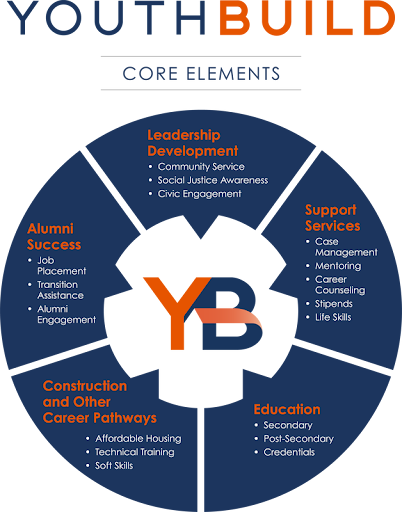
YouthBuild is a workforce development program that provides educational services, job training, career exploration, supportive services, and leadership development opportunities to young people who face barriers to employment. Youth selected for participation in the program will be offered full-time participation in the program for 6 months; and follow-up services and tracking of participant outcomes for an additional 12 months.
Eligible participants are youth ages 16-24 who left school without a diploma and are either a member of a low-income family, a foster care youth, a court-involved youth, a youth with a disability, a child of an incarcerated parent, or a migrant youth. Participants can choose to learn vocational skills in construction, as well as in healthcare. Participants trained in construction follow a pre-apprenticeship model where they learn construction, renovate/construct housing, and receive connections to registered apprenticeship opportunities in the building trades. Participants trained in healthcare will become a certified nursing assistant (CNA).
Participants split their time between 50% of program time receiving education services that lead to high school diploma or equivalency, 40% of program time engaged in workforce and skills development activities, and 10% of program time engaged in leadership development and community service activities. Participants trained in construction will provide community service through the construction or rehabilitation of affordable housing for low-income or homeless families in their own neighborhoods.
All youth will learn to be community leaders, and prepare for postsecondary training opportunities, including college, apprenticeships, and employment. Supportive services enable the youth to succeed in the classroom and the workforce by addressing barriers that may hinder educational and career progress throughout participation and the follow-up period, and may include assistance with transportation, child care, housing, supplies, and/or testing; needs-related payments, the provision of work attire and personal protective equipment; and reasonable accommodations for youth with disabilities.